Working on the translation...
A sealer is a substance that, when applied to a porous surface that prevents the transmission of liquids through that surface. Sealers may dry to a shiny finish when applied to the floor but they are not intended to be burnished to a shine like a polish is - you'll get your shine but eventually you will wear the seal through. Sealers are intended to be a permanent barrier between the surface to be treated and liquids. Generally a seal goes down first, followed by polish buffing.
The floor should only be resealed when the coating is starting to wear away in places. Sealers, polishes, and finishes are often used interchangeably, and some polishes do have sealing effects while other products labeled finishers are actually sealants, so be sure to carefully inspect products if you decided to buy them.
Tile Cleaners® prefer to use high quality non-solvent based stripping and sealing products. These products are not messy and won't damage your concrete floors or anything else in your home. Current non-solvent based strippers and techniques are more than adequate. Tile Cleaners® technicians can apply solvent based strippers in very specific circumstances, however this requires leaving the premises for up to 48 hours and a very high level of safety and protection.
Here at Tile Cleaners® we understand the importance of your family's safety, which is why Tile Cleaners® prefer to use non-toxic finishing agents as we not only want to protect your polished concrete floors, but your families health too. Materials and agents that present potential health hazards are not in our product portfolio and never have been.
Tile Cleaners® technicians can help to move items that one person could be expected to move such as furniture with wheels, light furniture, tables and chairs, however as Tile Cleaners® insurance covers our restoration services, we will not be held liable for any damage caused to furniture or property you request our technicians to move.
This depends on the type of sealer you decide to seal your tiles with. Topical sealers usually have a lifetime of around 3 years, while impregnating sealers have a lifetime of up to 15 years. On vertical surfaces impregnating sealers could last a lifetime, however, on heavy walkway areas or heavily used areas such as shower recesses, the areas should be checked more often and re-sealed if necessary. You can test how porous your surfaces are by applying a drop of water to the surface and watching how it is absorbed. You can then see how any type of water based stain can be absorbed by the surface.
Yes you can and it is recommended to seal your grout lines especially if they are a light colour, this will save you the likely cost of having to regrout your tiles only a few years after installation.
Whenever needed, and that depends on the type and quality of sealer used and the lifetime of the sealer.
Most sealers dry fairly quickly and are usually touch-dry after 4 hours. This is true of both penetrating and topical sealers. Penetrating sealers usually fully cure in 24 hours with topical sealers generally taking up to 48 hours to fully dry.
No, topical sealers create a membrane, film, or barrier that prevents the penetrating sealers from absorbing into the surface. Applying a penetrating sealer to a surface, requires any topical sealer to be removed prior to application.
The best way to keep your surfaces in good condition is to use a ph neutral cleaner followed by clean water for spills, otherwise a microfibre mop will get rid of dust.
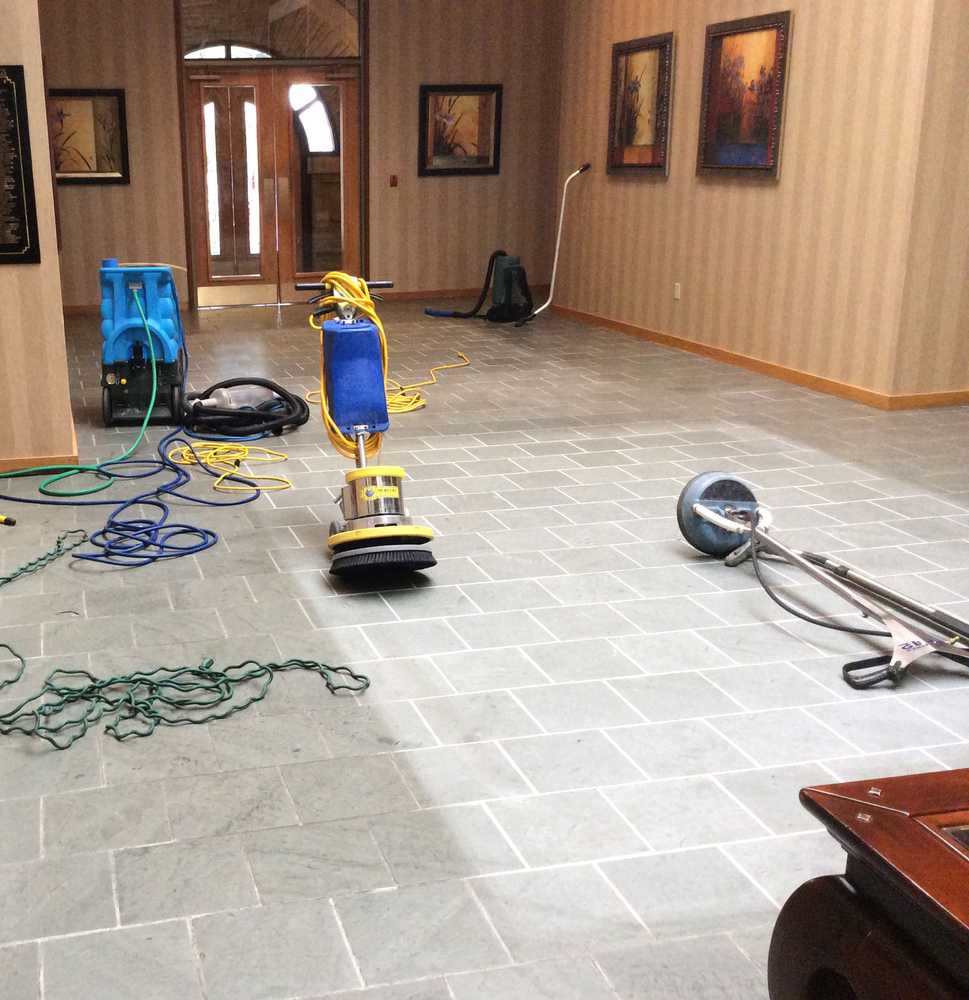
Our professional team will go through the job processes with you step by step so you know exactly what you're getting. The process includes stripping any previous sealer if it was applied, the floor is then thoroughly cleaned and neutralised so that it is free of dust, residue and anything else that can affect the new sealer. A new sealer is applied to the floor and allowed to set. The newly sealed floor will not only look new again, it will be protected and result in your floors becoming easier to maintain.
It depends on the type of sealer used and the amount of foot traffic the tiles are being exposed to. Australia's Deepshield™ range of deep impregnating water based sealer's offer long term benefits with Deepshield™ Gold lasting up to 15 years. Topical sealer's have a life expectancy of around 3 years. If you have a high amount of foot traffic or perhaps severe weather conditions you may experience a shorter lifetime. Sealing your surfaces may also depend on the surfaces condition. Once they start showing patchy areas and are staining easily then you should have them resealed. Give us a call and we can assist you with all your enquiries.
Many types of flooring can damage fairly easily, any oily or harsh spills can damage the surface and penetrate the pores leaving a permanent stain, unreachable by domestic cleaning methods. We strongly recommend sealing your surfaces to maintain their fresh look and feel, to protect against permanent staining and to prevent any future accidental damage. Your surfaces will look their very best for longer and will be easier and more convenient to maintain.
The best time to have your tiles or grout sealed is immediately after installation to prevent accidental staining or damage. You will know sealing is required once you start noticing patchy sealed areas of the floor and/or your tiles start staining easier.
Efflorescence is a problem that most porous surfaces can face. It's the tendency of the water to bring salts from the material to the surface as it evaporates. The water evaporates leaving the salts on the surface resulting in a whitish coating and ruining its finish. The only way to avoid this problem is to seal with one of our highest quality water resistant sealer's and to stop the source of the water that is penetrating the material, for example a water pipe leak or damaged grout.
That depends on the type of tile you have and the intended use.
That depends on the type os sealer used, and the number of coats applied.
Having a professional seal your tiles ensures you that the correct type of sealer is applied according to industry standards and that the tiles have been thoroughly and professional cleaned prior to sealing. Sealing over dirt and other blemishes results in the sealer locking in these blemishes which is why professional cleaning prior to sealing is required.
Tile Cleaners® charge per square meter for each separate room. There is a price list on the Tile Cleaners® website for you to review. Before we begin our work we will measure each room individually, confirm the work to be carried out as well as confirm all costs with you.
We recommend that you measure each area separately. The simplest way to measure is by multiplying the width by the length. For example a room that is 3 meters long and 2 meters wide is 3 X 2 = 6m2 in total.
It depends on the type of sealer used and the amount of foot traffic the tiles are being exposed to. Australia's Deepshield™ range of deep impregnating water based sealer's offer long term benefits with Deepshield™ Gold lasting up to 15 years. Topical sealer's have a life expectancy of around 3 years. If you have a high amount of foot traffic or perhaps severe weather conditions you may experience a shorter lifetime. Sealing your surfaces may also depend on the surfaces condition. Once they start showing patchy areas and are staining easily then you should have them resealed. Give us a call and we can assist you with all your enquiries.
That depends on the type of tile you have and the intended use.
Nothing is maintenance free! Sealing makes your surface easier to clean and harder to stain. Contaminants can sit on the surface longer, so you have more time to clean before any staining occurs. On some unsealed tiles and stone, staining can start immediately. Think of your stone sealing product as a bottle of time. No stone sealing product will make a porous surface stain-proof, but will make it highly stain resistant. Using the correct stone cleaning products also makes a difference.
It depends on the type of sealer used and the amount of foot traffic the stone is being exposed to. Australia's Deepshield™ range of deep impregnating water based sealer's offer long term benefits with Deepshield™ Gold lasting up to 15 years. Topical sealer's have a life expectancy of around 3 years. If you have a high amount of foot traffic or perhaps severe weather conditions you may experience a shorter lifetime. Sealing your stone can also depend on the surfaces condition. Once stone starts showing patchy areas and is staining easily then you should have it resealed. Give us a call and we can assist you with all your enquiries.